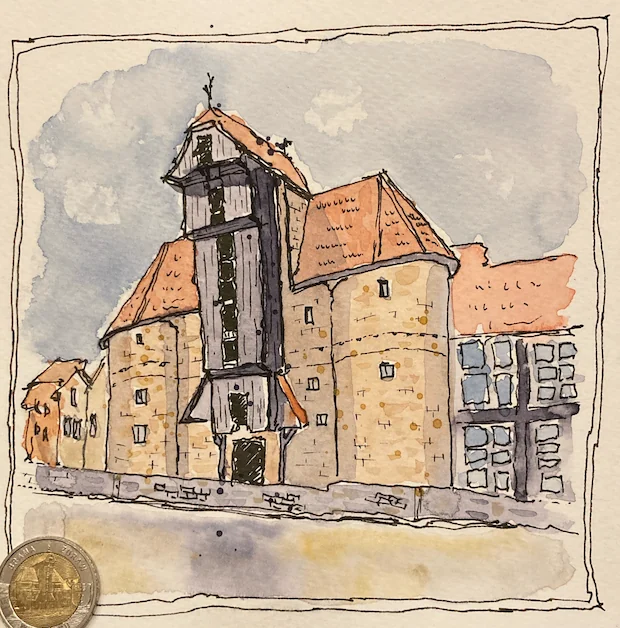
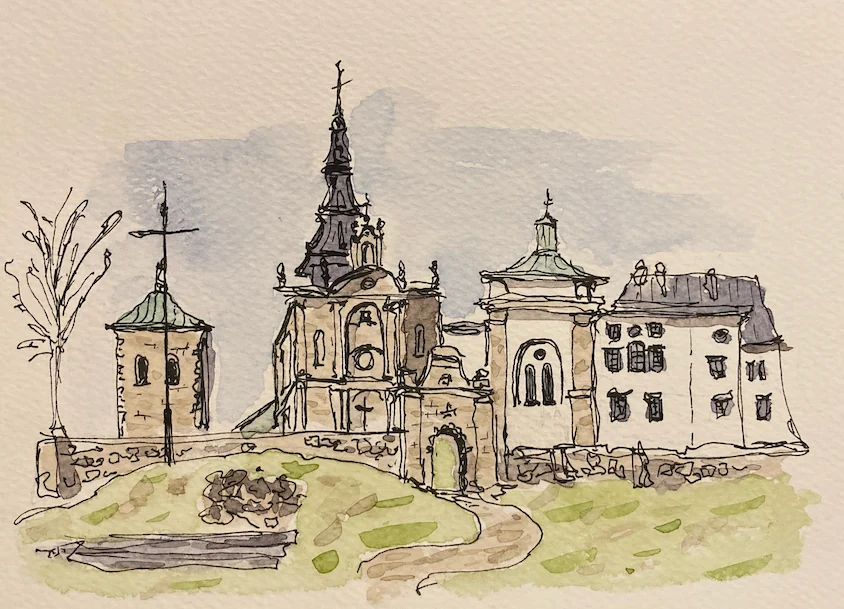
My Drawing No. 1
← All postsThe trigger
I was never particularly interested in making art. I always thought it wasn’t for me since I lacked natural talent. I also never felt the need to draw or paint. This changed around 2020/21, in my late thirties. While watching my kids in the backyard, I mindlessly carved a piece of wood or bark with my pocket knife — just fidgeting. The process itself was surprisingly enjoyable. I thought, how cool would it be to carve a simple figurine or toy and give it to the kids? With this skill, I could create something anywhere, on any outdoor trip, during a free moment.
I watched a few YouTube tutorials, and after some practice, I managed to carve something resembling a little face with a beard and mustache. Cool! Then I realized that for anything more complex, I needed to know how to draw—to sketch my idea on wood and to develop general spatial awareness. That was the first time I considered drawing. At first, as a prerequisite for carving, but later as a skill worth pursuing on its own. So, I put carving aside and added drawing to my to-do list.
Finally getting started
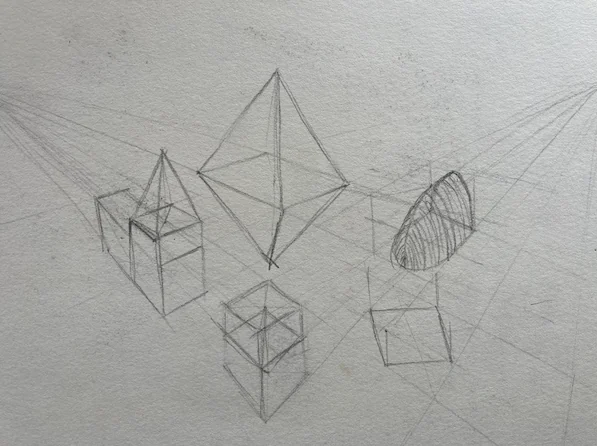
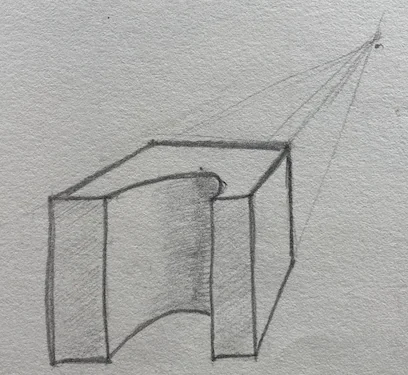
I picked it up a few years later, in 2023. I don’t remember exactly why, but at some point, my wife bought me a nice spiral-bound sketchbook and some pencils. Before getting my hands dirty, I wanted to learn some theory. After some research, I decided to study perspective first: one-point perspective, two-point perspective, drawing boxes, rotating boxes, simple shapes, techniques to calculate halves in perspective, etc.
At first, it was exciting to draw something in the correct perspective — especially two-point perspective. But after a while, I hit a wall. I could think in boxes and even draw a simplistic church with reasonable accuracy, but it lacked detail. When I tried to draw my house, I became overwhelmed by all the perspective lines and angles. And those were just the main shapes — what about the chimneys, stairs, cornices, and all the finer details? What about maintaining correct distances in perspective? I realized I was approaching it as an architectural drawing rather than a piece of art. After a few months, I put drawing aside again.
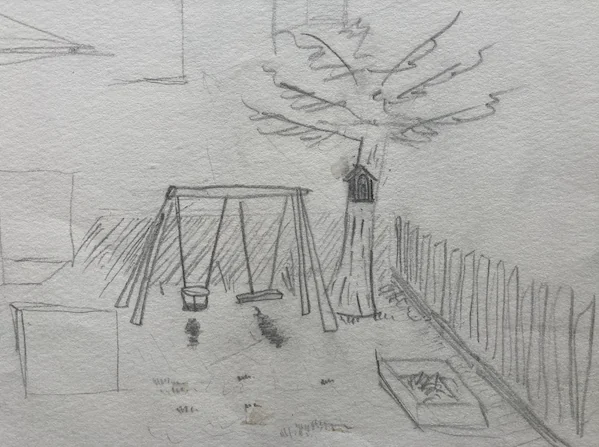
Urban sketching
Even after stopping, drawing kept nagging at me every time I saw a beautiful building that I couldn’t sketch. I really wanted to capture the architecture I admired. I reconsidered my goals and narrowed them down. It became clear that what I truly wanted was to depict architecture and historic cityscapes. I have always appreciated beautiful buildings, and I wanted to sketch them quickly and loosely, possibly on location — more of a sketch than a polished masterpiece.
That’s when I discovered urban sketching in the autumn of 2024. It was exactly what I was looking for—loose sketches of cityscapes using ink and possibly watercolor or markers. I found artists like SketchingScottie, TobySketchLoose, Teoh Yi Chie, to name a few.
The key takeaway from them was that my sketches didn’t need to be photorealistic; they could simply be an impression of what I saw. Certain details could be suggested rather than meticulously rendered. Also, I didn’t need to map out every perspective line — capturing the general angles was often enough. That realization was liberating.
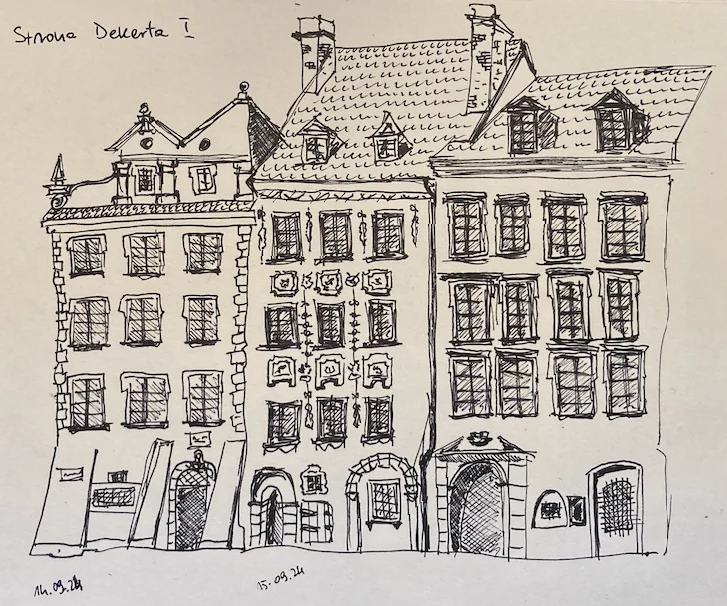
Below is my first attempt at drawing a few historic buildings in Warsaw’s Old Town using Scottie’s loose approach. Not great, but at least it finally looked like a drawing rather than an abstract exercise!
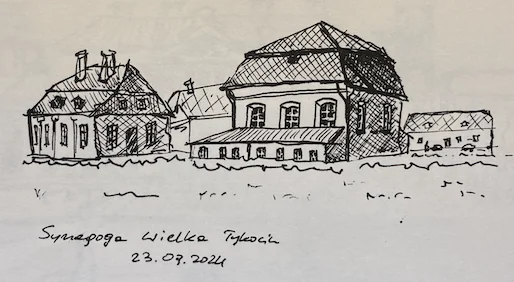
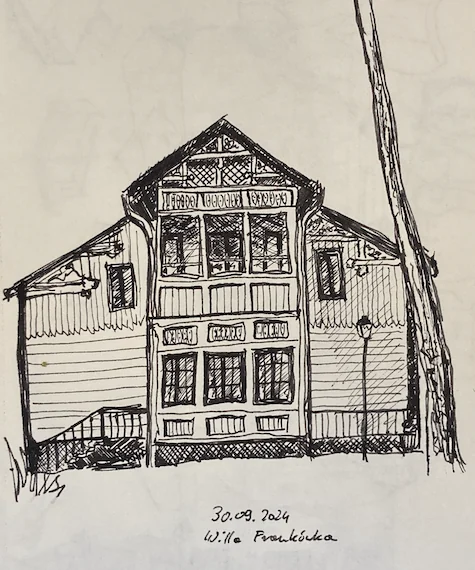
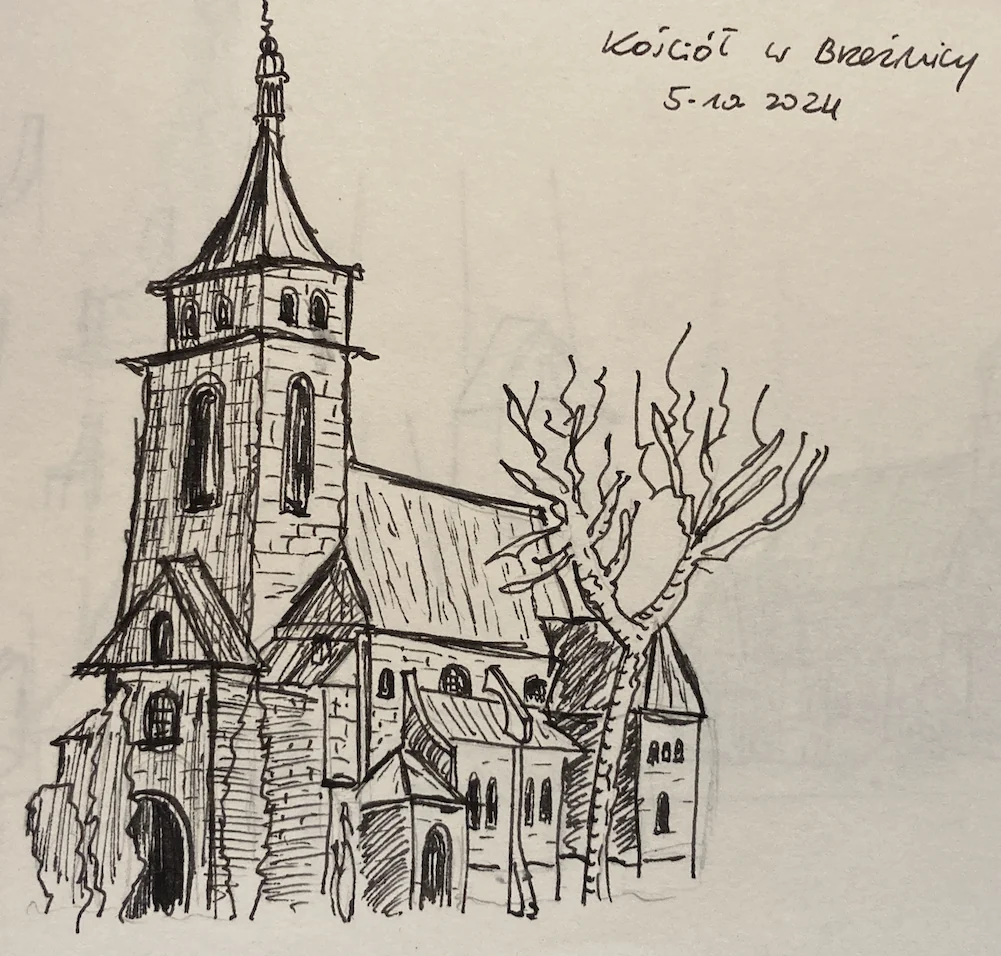
I bought a fountain pen, and over the next few months, I drew almost every day, truly enjoying the process, the outcomes, and the progress. I used photos as references. Here are a few sketches from that time:
Adding colors
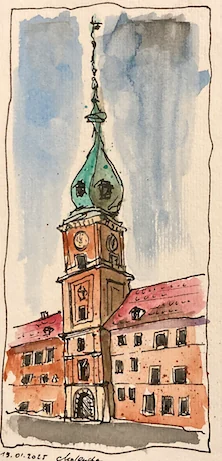
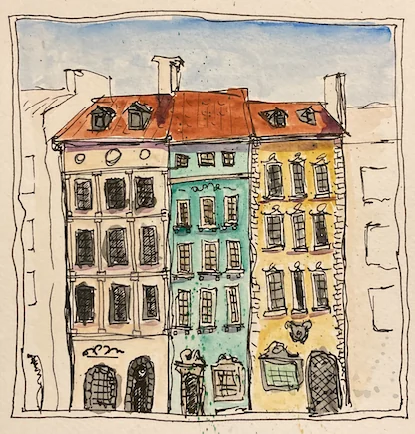
In early 2025, I decided to experiment with color. I had already tried a few sketches with my kids’ crayons, which already gave my work a new dimension. Since many urban sketchers use watercolor, I wanted to try it too. I started with my daughter’s school watercolors and dedicated watercolor paper. Below are my first two attempts:
What's next?
Drawing has changed how I see the world. I now notice far more details, shades, light, and textures. For now, I’ll keep sketching and painting what I enjoy most, gradually improving so that I can eventually paint on location. I also want to study textures more — brick walls, trees, water, etc., and at some point, start incorporating human figures.